

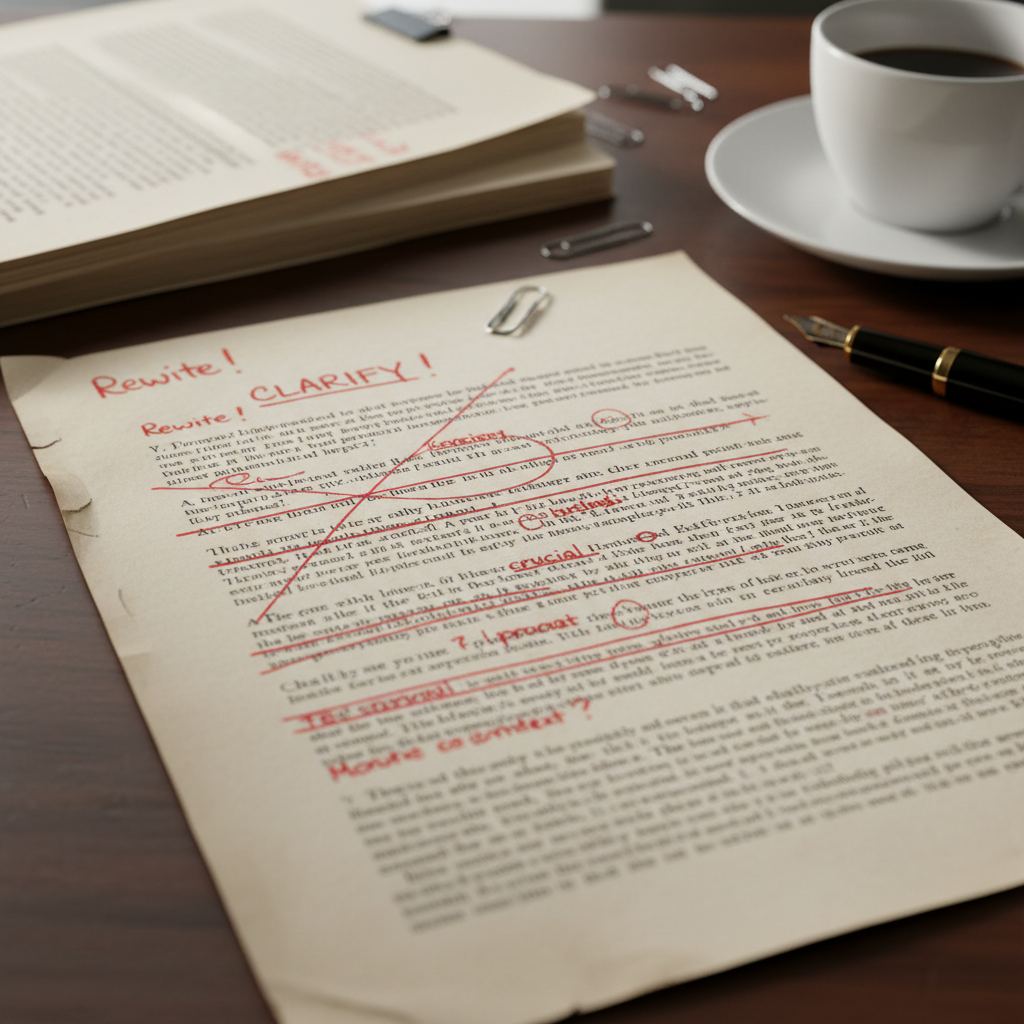




"Nobody assigns you the story
that makes your career.
You assign it to yourself."
Pitch templates that landed. Ledes that stopped editors mid-scroll. Rejection notes that preceded Pulitzer finalists. Everything the j-school syllabus never covered.
The Morgue — Resource Library
Your clips
are your
currency.
Every resource in the morgue was written by a journalist who made the jump — metro to national, staff to freelance, beat reporter to bureau chief.
The 11-Line Pitch That Landed the Rolling Stone Assignment
Annotated line-by-line. Every sentence earns its place. Why the subject line is a headline, not a summary.
Negotiating Past the First Offer
Word-for-word scripts for the awkward silence after "we'd like to bring you on."
Metro to Investigative: The 90-Day Clip Strategy
The specific stories you pitch to prove you can work a source over eighteen months.
Six Ledes That Stopped Editors Mid-Scroll
Deconstructed openings from ProPublica, The Atlantic, and the Times. What makes them impossible to abandon.
The 2 AM Pitch Checklist
What to verify before you hit send when you're running on deadline adrenaline and cold coffee.
Building a Source Network When You're New to the Beat
How to cold-approach officials, academics, and whistleblowers without burning the relationship before it starts.
Full access requires one thing: Open the Morgue
Career Case Studies
The best stories
start with the
worst beats.
Three reporters. Three unglamorous starting points. Three jumps that actually happened — documented here so you can steal the playbook.

Marcus Webb
Jump time: 14 months
Metro Crime
Local TV affiliate
4 years
National Security
ProPublica
Staff Investigator
The beat-switch playbook told me exactly which stories to pitch on my own time to prove I could work a source over months, not hours.
Spent four years covering police blotters. Used a single weekend investigation into a housing authority contract — unpublished, just for clips — to land his first national pitch.
Read the full playbook →
Priya Anand
Jump time: 8 months
Education
Regional daily
6 years
Data Journalism
The New York Times
Data Reporter
I had no idea my education beat was full of FOIA-able data. The resource library showed me how to reframe every story I'd ever written.
Pulled five years of school-district vendor contracts, built a simple spreadsheet analysis, and pitched it as a data story. The Times responded in four days.
Read the full playbook →
Delphine Osei
Jump time: 11 months
Freelance General
Content mills + local weeklies
3 years
Health & Science
STAT News
Contributing Writer
The 2 AM pitch checklist stopped me from sending a half-baked idea to the wrong editor at the wrong time. That discipline changed everything.
Stopped writing for $0.08/word sites and spent three months pitching only one category. Sent 22 pitches to health desks before landing a $3,200 feature.
Read the full playbook →From the field
Reporters who made the jump.
Byline is the only career resource that doesn't talk to journalists like we're in a LinkedIn workshop. It speaks the language. It knows what a nut graf is.

Simone Adeyemi
Investigative Reporter
The Guardian US
I'd been freelancing for three years and pitching into the void. The salary negotiation scripts alone were worth six months of newsletter access.

Rafael Montoya
Freelance Contributor
WIRED · The Atlantic
The annotated pitch collection is something journalism schools should be teaching. I went from a 4% response rate to 31% in two months.

Yuki Tanaka
Metro Reporter → National Desk
Associated Press
The Weekly Dispatch — Archive
File
or
die.
41 dispatches on the craft and business of journalism. Every Wednesday, without exception. The archive is open.
The Pitch That Took Eighteen Months to Land
On the specific patience required to pursue a story no editor has asked for — and the moment you know it's finally ready.
What Your Editor Means When They Say "Sharpen the Lede"
A taxonomy of editor feedback, translated from diplomatic to direct. Plus: the three lede structures that survive every revision.
Freelance Rate Negotiation in a Declining Print Market
How to hold your rate when the editor says the budget is tight — and how to know when they actually mean it.
Building the Beat Nobody Assigned You
The reporters who own their beat didn't wait for a desk to hand it to them. A framework for staking your territory.
The Morgue — Resource Vault
Open the
Morgue.
- —47 annotated pitch emails with editor responses
- —Beat-switch playbooks for 6 common career pivots
- —Salary negotiation scripts for staff and freelance
- —The rejection archive — 23 pre-Pulitzer rejections
- —Source cold-approach templates that actually work